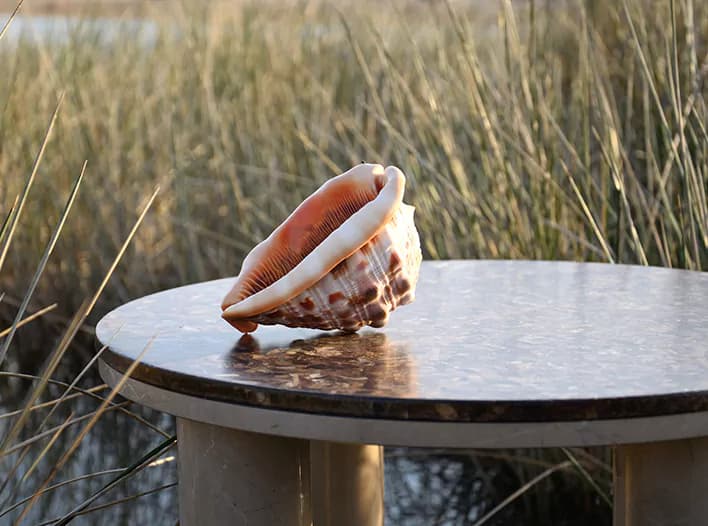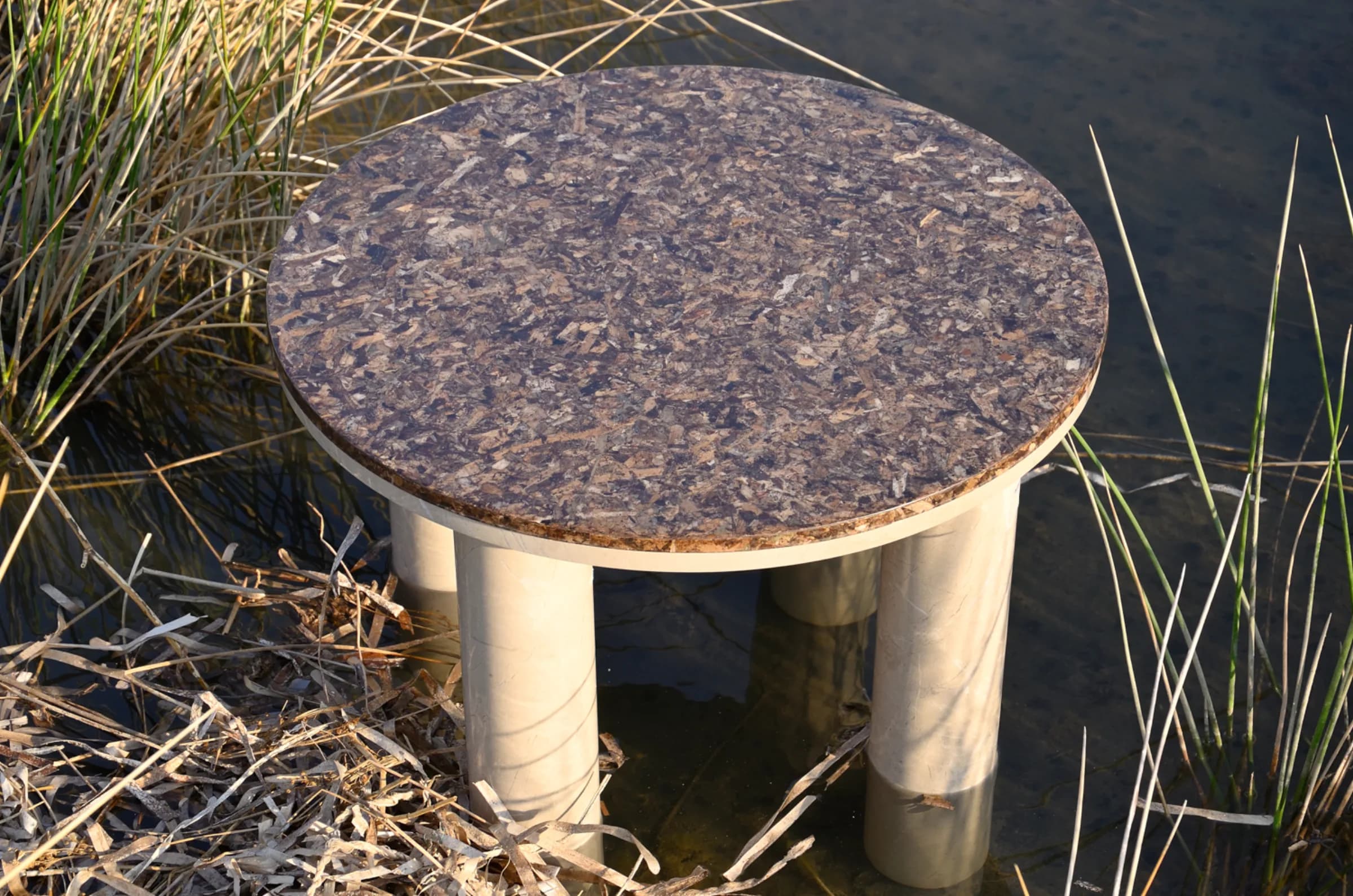
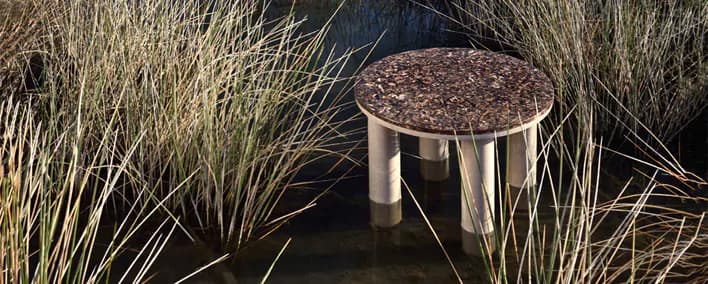
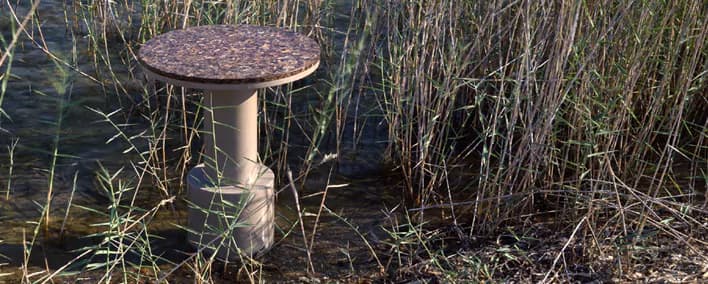
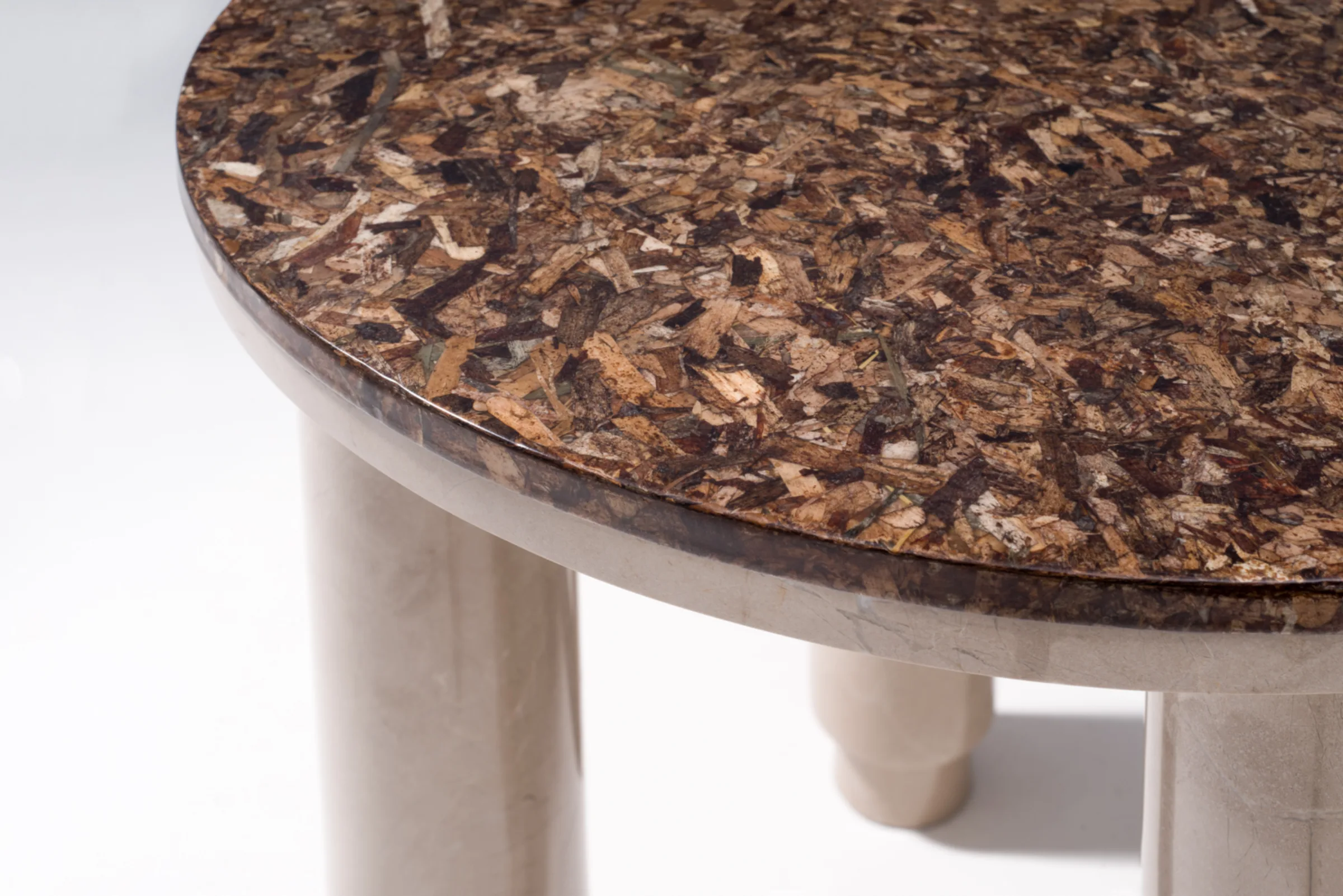
Oceanides is a series of sustainable luxury tables by Alex Mint, designed by Alexia Mintsouli and inspired by the ocean breeze. Each piece is hand-crafted from two natural materials: the mesmerizing Peloponnesian Tortora marble, and the sea plant Posidonia Oceanica.
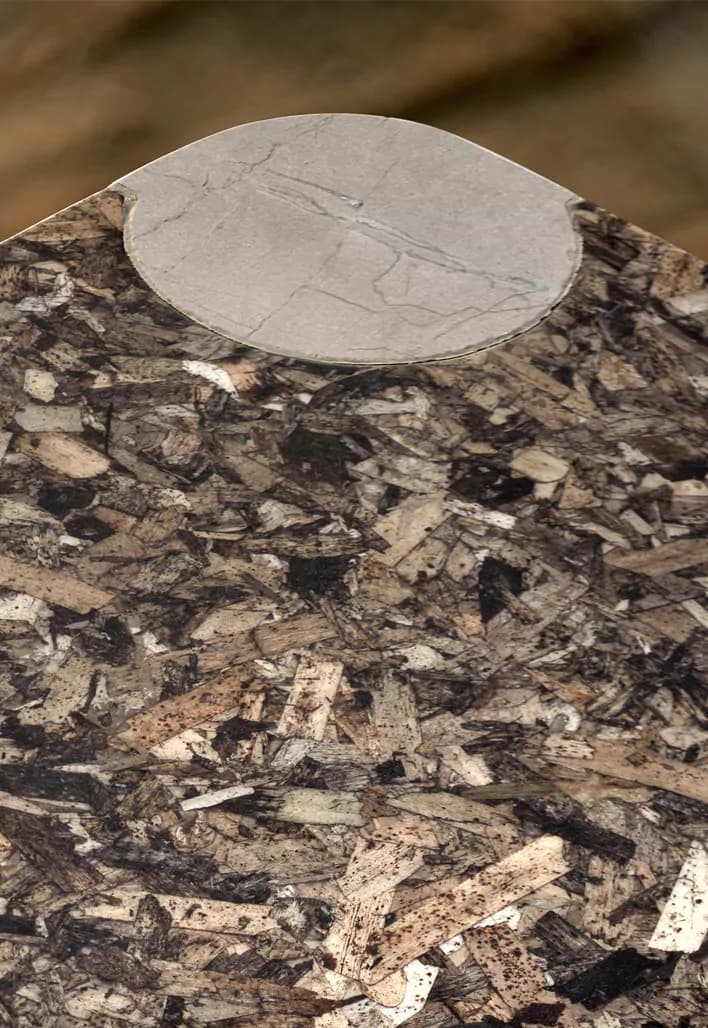
The marble is turned into the cylindrical legs and base. The tops are PHEE Board™, pressed from Posidonia leaves that wash up on Mediterranean beaches. The natural patternation of the sea plant is accentuated in every piece, so no two tops are the same.
Driven by our love for the environment and our belief in sustainability, we created these eco-friendly tables, in cooperation with local Greek workers.
Alex Mint
The collection takes its name from the sea plant used in the furniture, Posidonia Oceanica. In Greek mythology the Oceanides were sea nymphs, daughters of the Titan Oceanus, the great primordial world-encircling river, and Tethys, the sea goddess, rulers of the earth and her deep waters. The three tables carry their names.
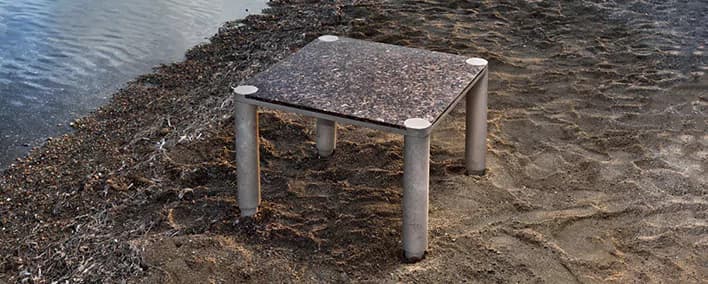
Posidonia Oceanica is one of the oldest living organisms on Earth. Its leaves wash ashore in banks that coastal municipalities pay to clear and send to landfill. Sea plants have great sustainable potential: they clean the ocean from pollution and convert CO2 into oxygen, one of the main sources of oxygen on earth.
PHEE came up with a sustainable solution for Mediterranean coastal Municipalities as she is receiving the washed up Posidonia Oceanica leaves for upcycling them instead of being landfilled and by this way she helps in the reduction of public money annually spent and the reduction of CO2 emissions to the environment.
Alex Mint
In Oceanides that stream ends up as a tabletop with a pattern no factory could repeat, sitting on marble from the same coastline.